


Application Notes

Getting started with fully defined HiDef® B8 for human pluripotent stem cell adherent cultures
This user guide provides a practical starting framework for transitioning adherent human pluripotent stem cells (hPSCs), including ESCs and iPSCs, from conventional high-protein maintenance media such as mTeSR™ Plus to the fully defined, animal-free HiDef® B8 medium. The guide outlines a recommended direct adaptation workflow in which cells are switched to 100% HiDef-B8 at passage or thaw, with Ready-CEPT® used during inoculation or immediately after passage to support recovery. It also discusses a more gradual adaptation option for sensitive lines, while noting that transition requirements can vary by cell line and that several passages may be needed for growth rates to normalize.
Beyond the initial transition, this guide provides practical recommendations for establishing reliable, weekend-free adherent hPSC culture, including optimal confluence, aggregate passaging with HiDef PBS/EDTA, skip-day feeding, seeding considerations for fragile lines, and the advantages of low-oxygen culture during adaptation. It also highlights the expected morphological shift from the tighter, “island-like” colonies commonly observed in protein-rich media to the looser, “continent-like” morphology characteristic of cells maintained in HiDef-B8, without loss of pluripotency. Together with published evidence supporting long-term pluripotency, genomic stability, and performance across numerous PSC lines, this guide gives researchers a straightforward path for moving toward a lower-protein, chemically defined, animal-free culture system that is compatible with both routine research and future cGMP-aligned workflows.
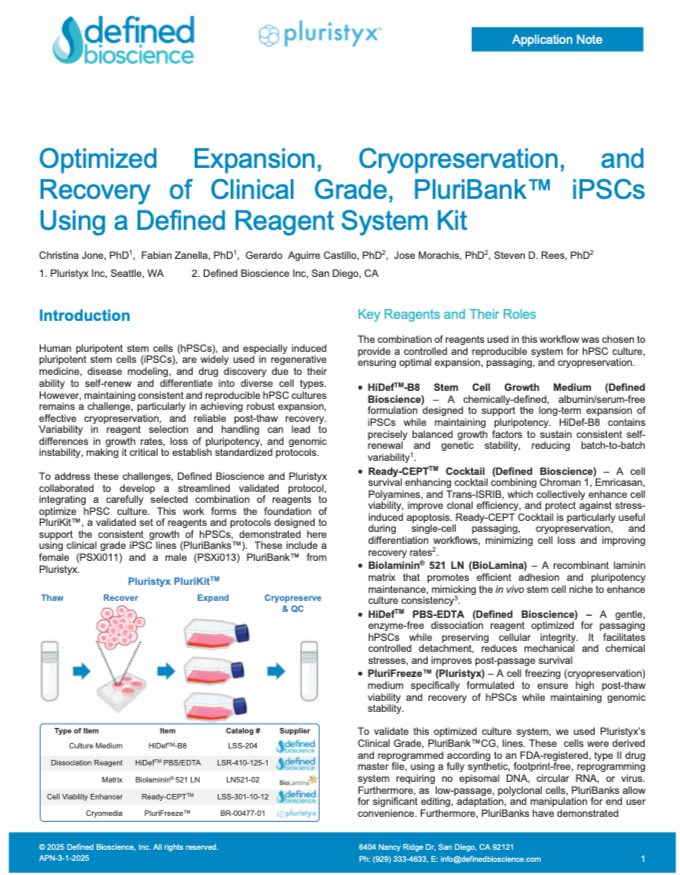
Optimized Expansion, Cryopreservation, and Recovery of Clinical Grade, PluriBank iPSCs Using a Defined Reagent System Kit
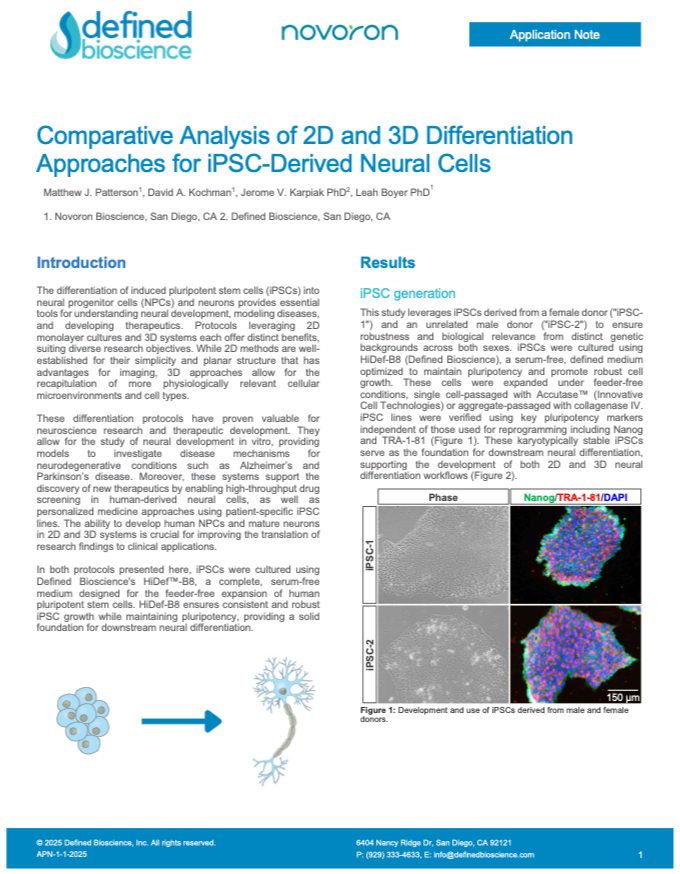
Comparative Analysis of 2D and 3D Differentiation Approaches for iPSC-Derived Neural Cells
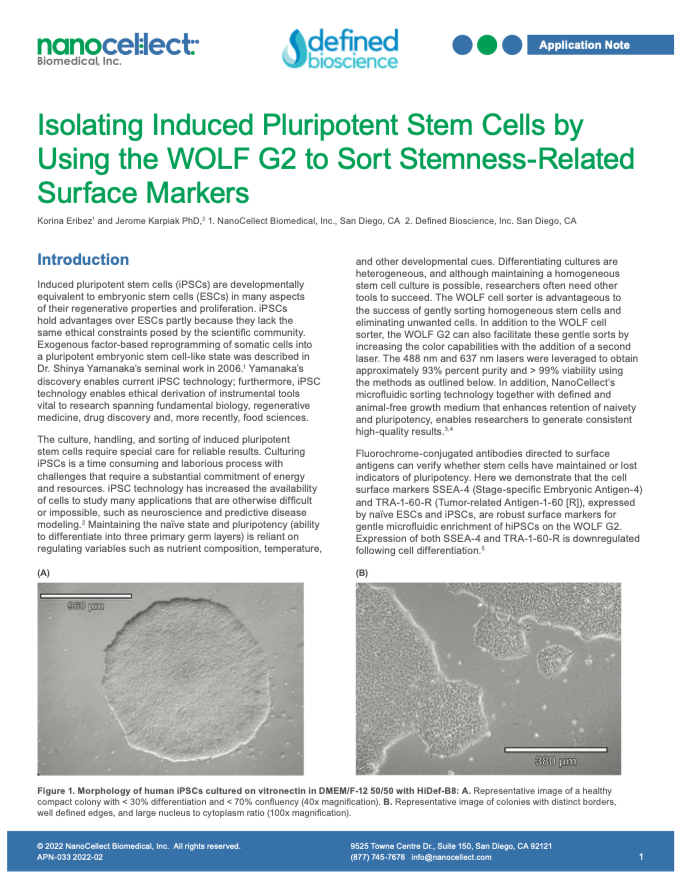
Isolating Induced Pluripotent Stem Cells by Using the WOLF G2 to Sort Stemness-Related Surface Markers

Posters

Pluripotent Stem Cell Expansion in a Stirred-Tank Bioreactor: Optimization and Automation of Feeding Strategies
Large-scale expansion of human pluripotent stem cells remains constrained by the cost, scalability, and reproducibility of conventional culture methods. We developed HiDef® S8®, a chemically defined, animal-free suspension medium that supports efficient, high-density expansion of hPSCs in stirred-tank bioreactors while maintaining pluripotency and downstream differentiation capacity. Presented at ISSCR 2026.
Transforming Growth Factor Beta-3 in Suspension Culture Media for Induced Pluripotent Stem Cells
Growth factors represent one of the largest cost drivers in stem cell culture media, motivating the development of affordable, recombinant alternatives without compromising performance. We produced recombinant human TGFβ-3 in E. coli and evaluated its performance in HiDef® S8®, a chemically defined suspension medium for human pluripotent stem cells, demonstrating maintained pluripotency and efficient aggregate expansion. Presented at CIRM 2026.


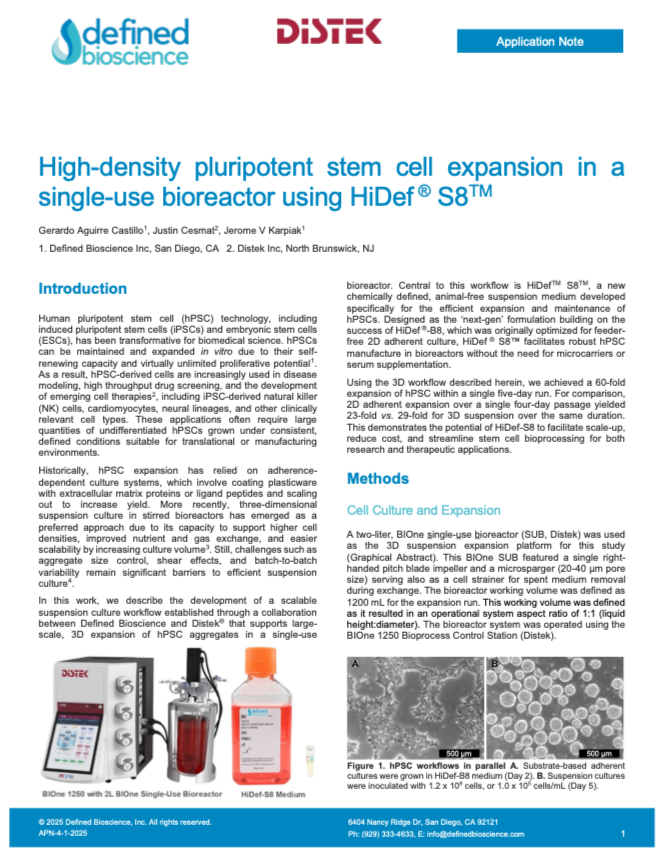
High-density Pluripotent Stem Cell (iPSC) Expansion in a Single-use Bioreactor using HiDef® S8
This poster highlights a collaborative bioreactor workflow for high-density suspension expansion of human pluripotent stem cells using HiDef® S8. We demonstrate consistent aggregate formation, rapid five-day expansion to more than seven billion cells, and seamless return to 2D culture with maintained pluripotency and differentiation potential. This platform provides a scalable, animal-free solution for efficient large-volume hPSC manufacturing. Presented at BMES 2025.
iPSC Expansion in a Stirred-Tank Bioreactor: Optimization and Automation of Feeding Strategies to Achieve Economic Feasibility
This poster presents a comparative bioreactor study led by IST Lisbon using HiDef® S8 to evaluate media performance, automated feeding strategies, and cost efficiency in stirred-tank iPSC expansion. S8 supported faster growth, higher TRA-1-60⁺ yields, and superior pluripotency maintenance at substantially lower media usage and cost. The work highlights S8 as a high-density, economically favorable suspension medium suitable for scalable 3D iPSC manufacturing and downstream applications. Presented at BMES 2025.

Growth factor production for enhanced growth of fish multipotent stem cells for cell-cultivated meat
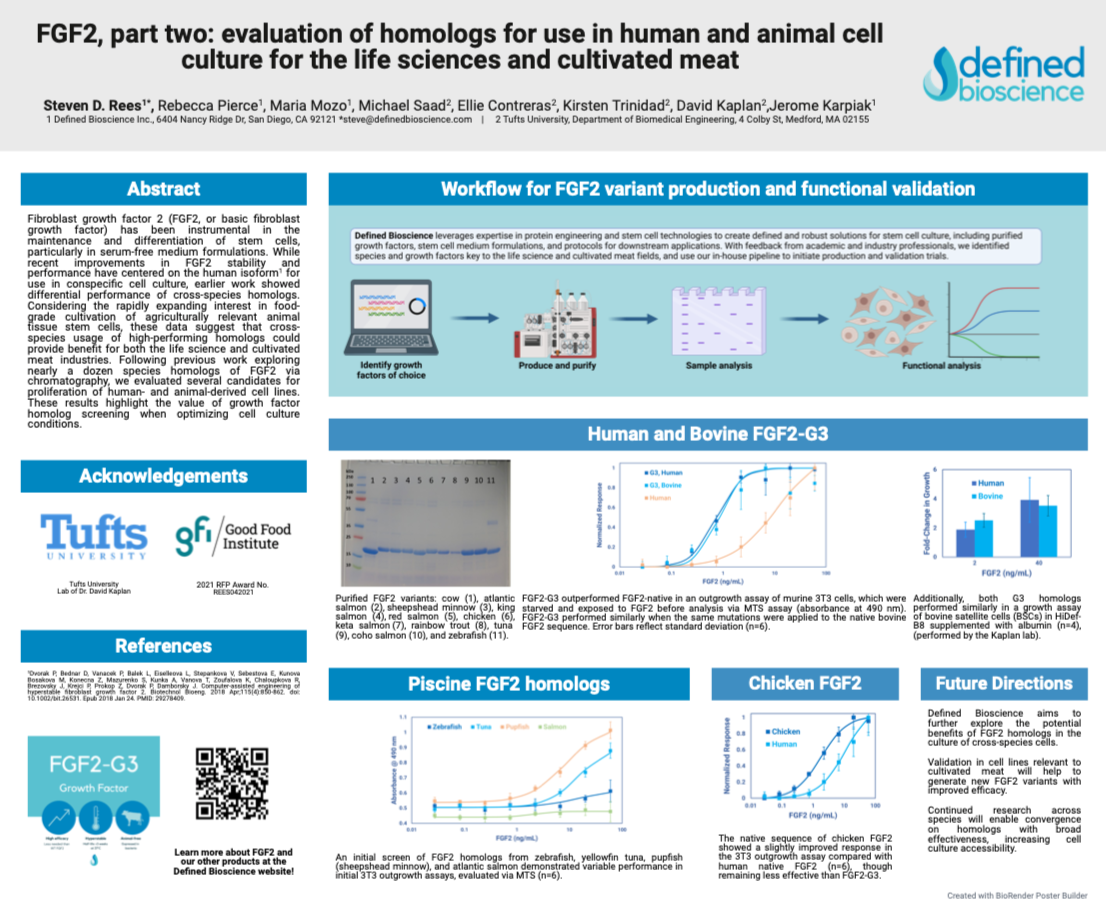
FGF2, part two: evaluation of homologs for use in human and animal cell culture for the life sciences and cultivated meat
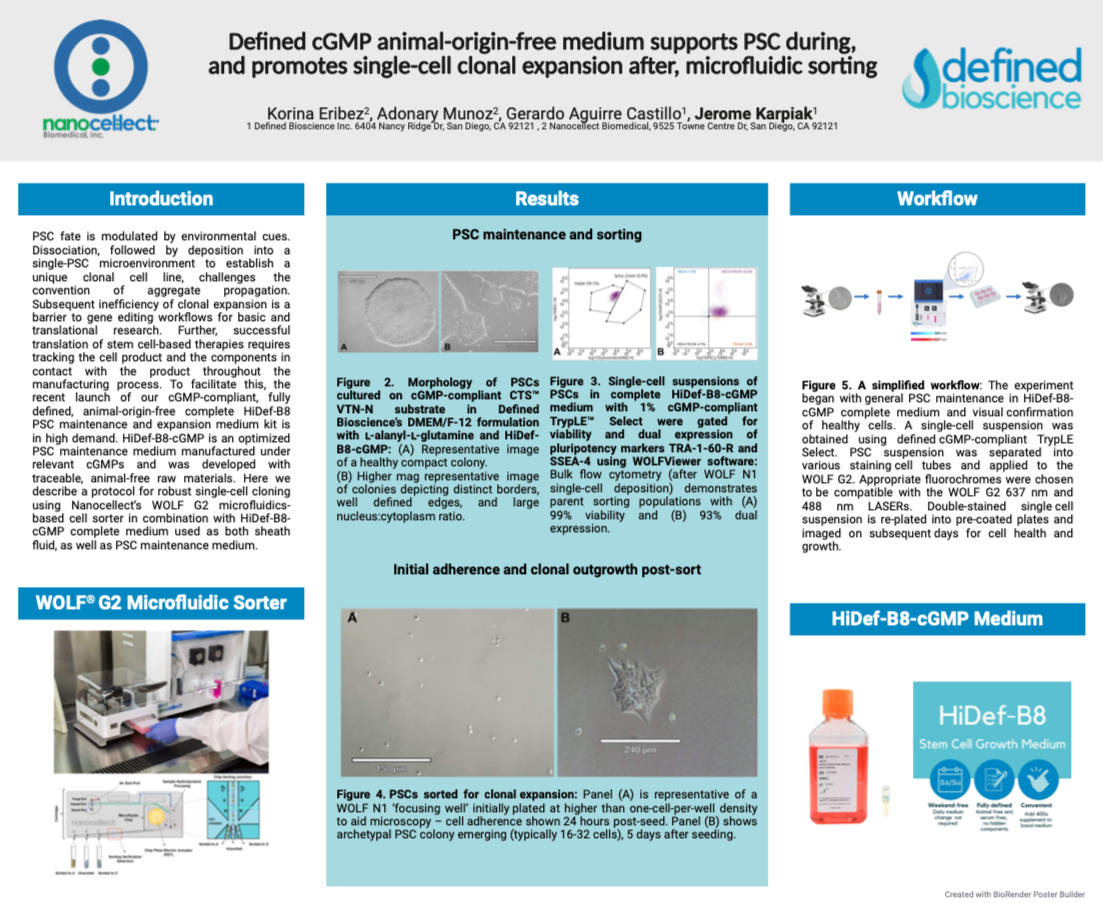
Defined cGMP animal-origin-free medium supports PSC during, and promotes single-cell clonal expansion after, microfluidic sorting
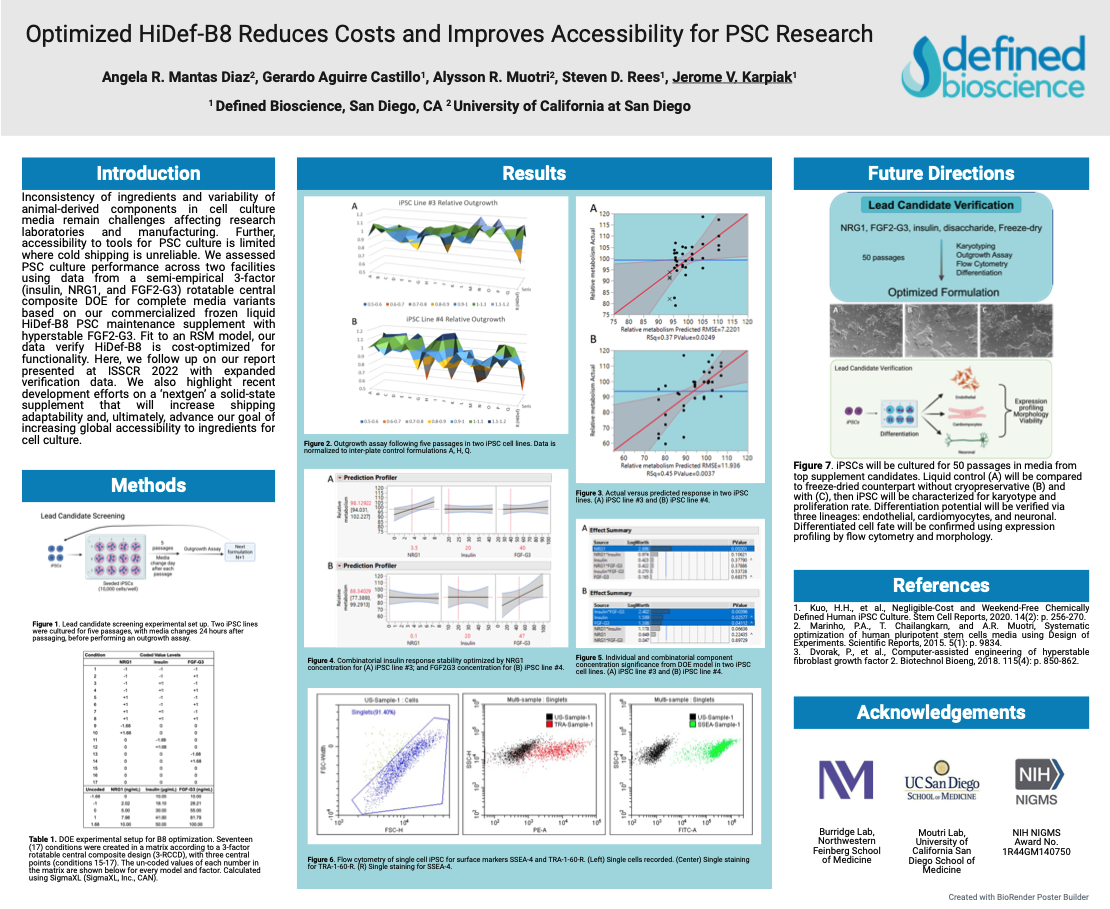
Optimized HiDef® B8 Reduces Costs and Improves Accessibility for PSC Research
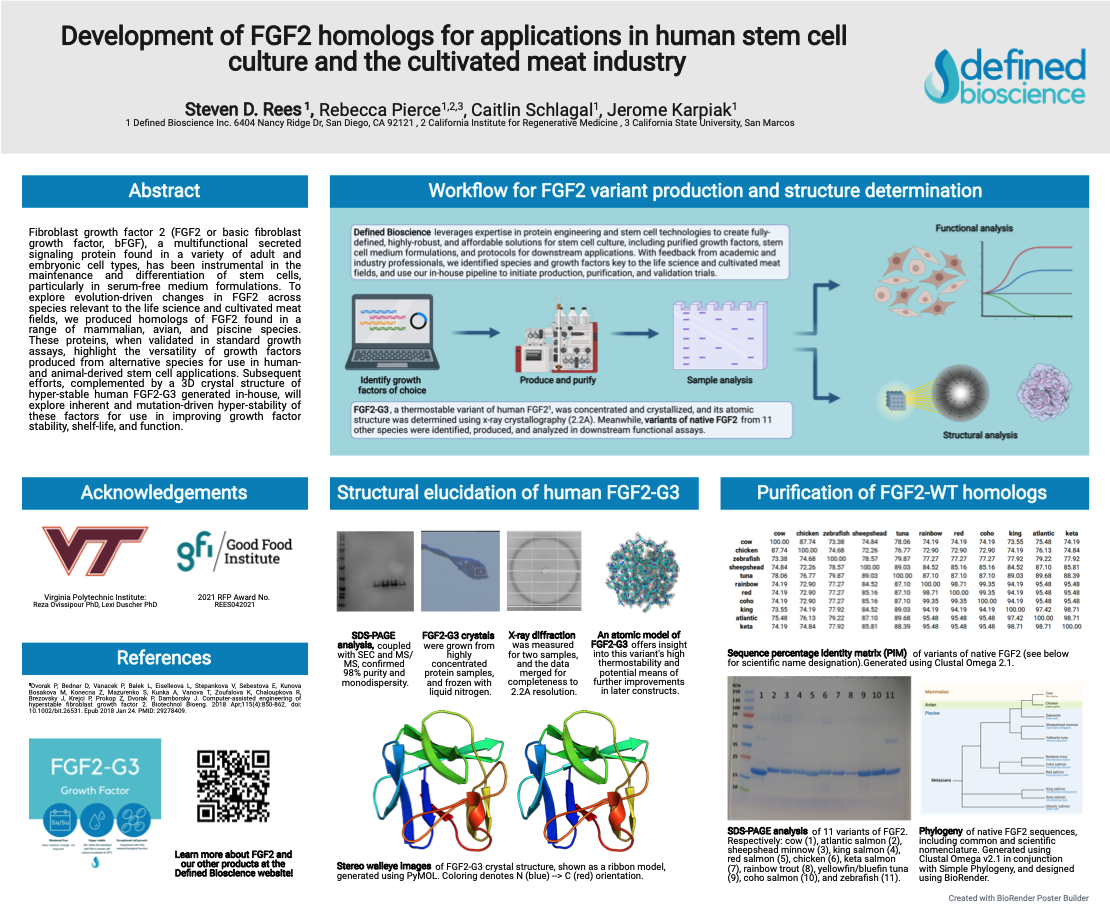
Development of FGF2 homologs for applications in human stem cell culture and the cultivated meat industry
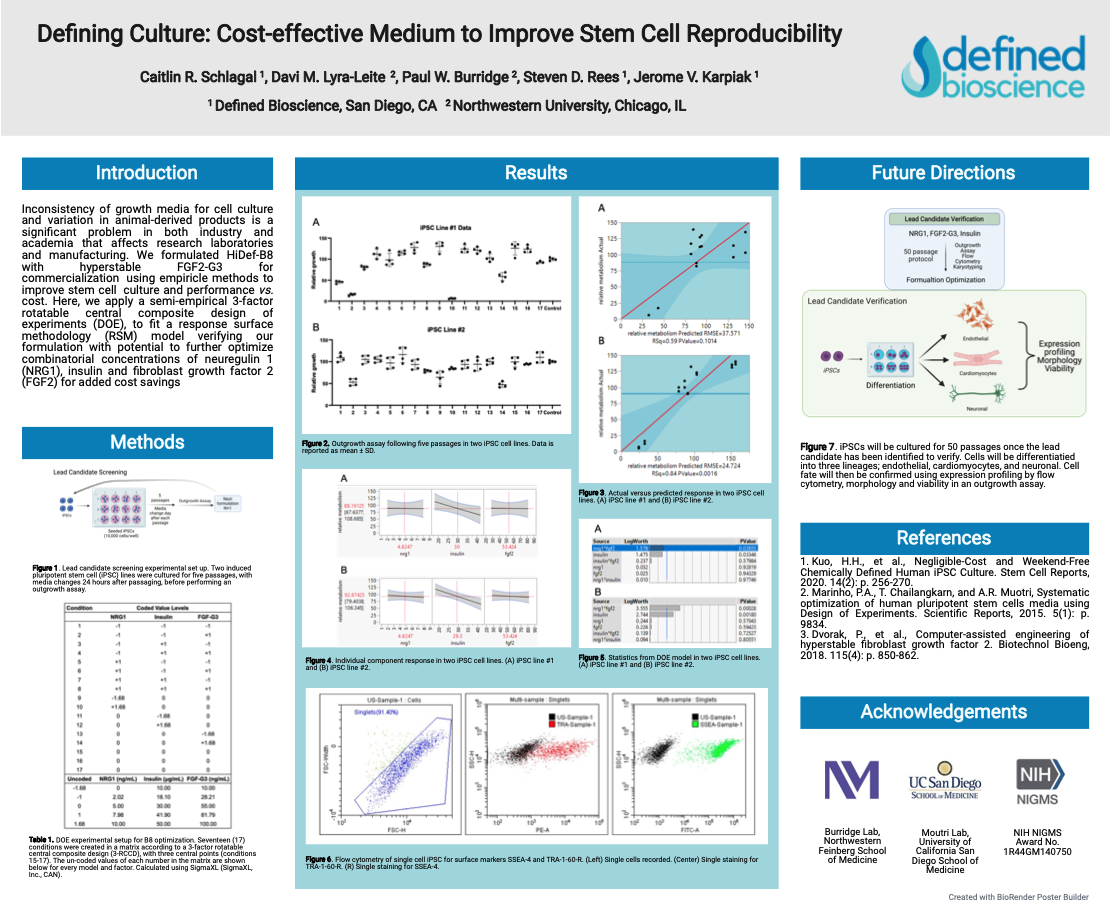
Defining Culture: Cost-effective Medium to Improve Stem Cell Reproducibility
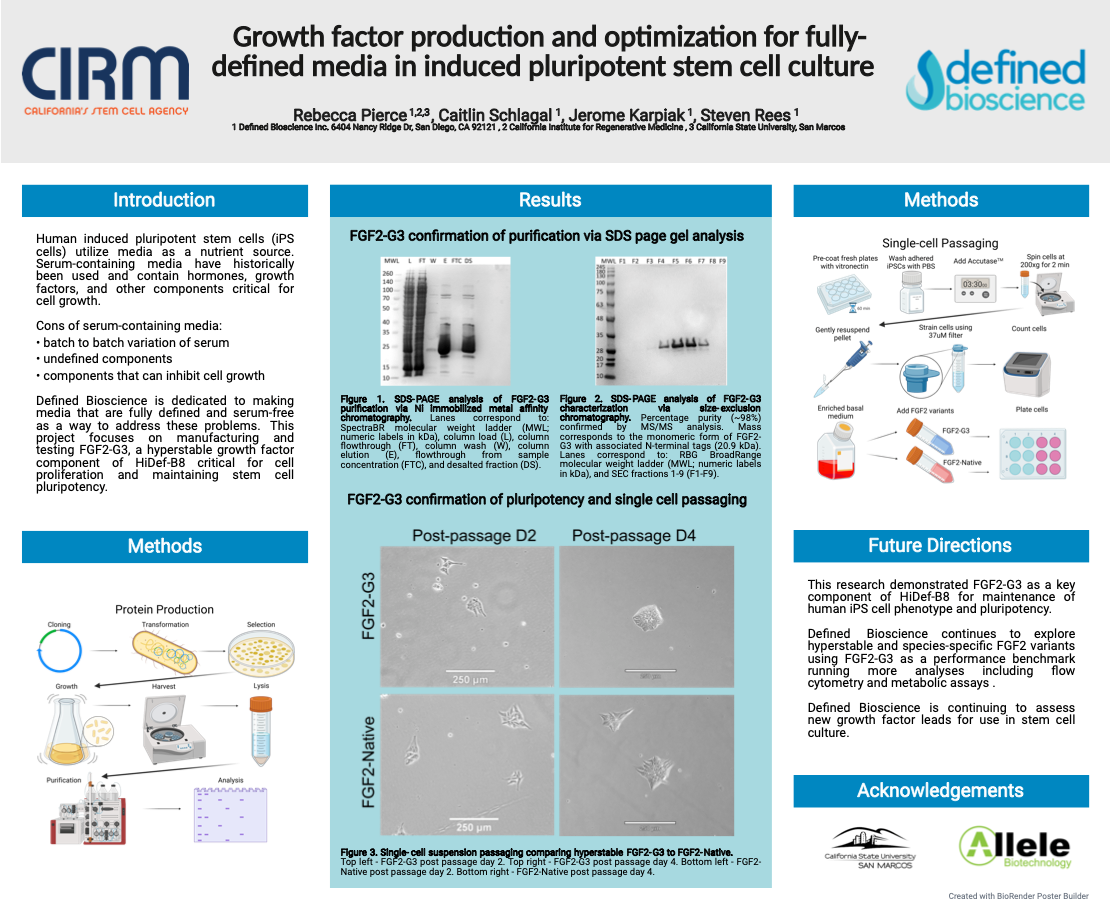
Growth factor production and optimization for fully-defined media in induced pluripotent stem cell culture

Let’s Collaborate on What’s Next
We welcome partnerships with biomedical innovators, biotech leaders, and research institutions. If you're shaping the next breakthrough, let’s collaborate.